How to find out if you actually OWN your real estate website design

When you attend a real estate marketing event I am speaking at, you will hear me say, “Why rent when you can own?” I am speaking of websites of course and not home sales. In an older post I go over all the different types of real estate websites you can have designed, but at the end of the day, if you want to own your website outright, your options are few.

I recently had a Realtor post in the Lab Coat Agents Facebook group asking about websites. We had a private discussion about real estate website design and the next day she asked me, “How do I know if I will actually own the website once I order it?” This is a great question because there are sales reps telling prospects they will own their website when in all reality, they may own their content but not the container.

These are the questions to ask:

“OK, so you are telling me I own the website. That would mean if I wanted to, I could take the website and move it to my personal hosting account on Godaddy. Right?”

“And if I own the website, I can have one of my web developers go in and make modifications?”

“And if it is WordPress, not only can I host it anywhere, but I have full admin controls and can add any plugins, pages, script or code I want. Correct?

“And lastly, if I own the site I can switch out the IDX anytime I want?”

If they answer no to any of the above, you don’t own your website. I am not saying this is a horrible thing mind you if you are happy with the website you are renting and the marketing services that web developer is offering. I just feel you need to have complete control over the history of your online branding.

For example, Keller Williams agents and teams represent a majority of our business. Many KW agents use the web system provided by KW. For the longest time that was a website system provided by Market Leader. Some Keller Williams agents had horribly outdated Market Leader sites for years. Then at last year’s Family Reunion, it was announced that they were going with Placester which was a HUGE improvement. Still though, I feel agents with any major national real estate franchise should be off the corporate grid as much as possible and control their branding outright.

At the end of the day you want leads, and maybe owning your website is not a big deal to you. This is why you go with the big lead gen companies that generate leads via PPC campaigns, and loan you a website while you are using their marketing system. This is a great strategy if you have the budget, however I still feel you need to own the “mother ship”.

The mother ship should be WordPress based and the blog should be activated. You should own your site outright so you can build an online history through blogging and community specific landing pages. Your site should have an IDX integrated that will allow for the search engines to essentially index the MLS as if you owned it. When you Google the street address of one of your listings and see your competitors with your listing on their website, they have this indexing active. We are an IDX Broker Developer Partner.

Question for you, setting aside international real estate brokerages that change website platforms for their agents, have you ever been victim to a website provider going out of business? As a personal favor to a major player in the industry I won’t mention the company name, but they went out of business giving their clients 30 days notice. Many Realtors had procrastinated and were left without websites for a time. If you own your own site, this does not happen.

There is no major conspiracy from real estate website vendors to keep you from owning your own website. There are some great website providers in the marketplace that have developed some great call to action (CTA’s) processes for lead generation provided you are getting the traffic. Most of these technologies are proprietary in nature and can only be served up through an internal shared site server system within their control. No way around it, and that’s OK if you are happy with the results you are getting.

Lastly, If you are renting your website make sure it has a blog in a sub-directory and not a sub-domain. And so that you don’t lose your online blogging history should you ever change website providers, make sure they have a way to transfer your content to you should you ever leave.

Obviously by now you clearly understand my position on website ownership. Just make sure YOU clearly understand what you own vs what you are renting.
 

Google says 49% of real estate consumers look for trust

In other posts I have written about the importance having a well rounded positive online reputation. Having a great online reputation increases the ROI of your marketing dollars.

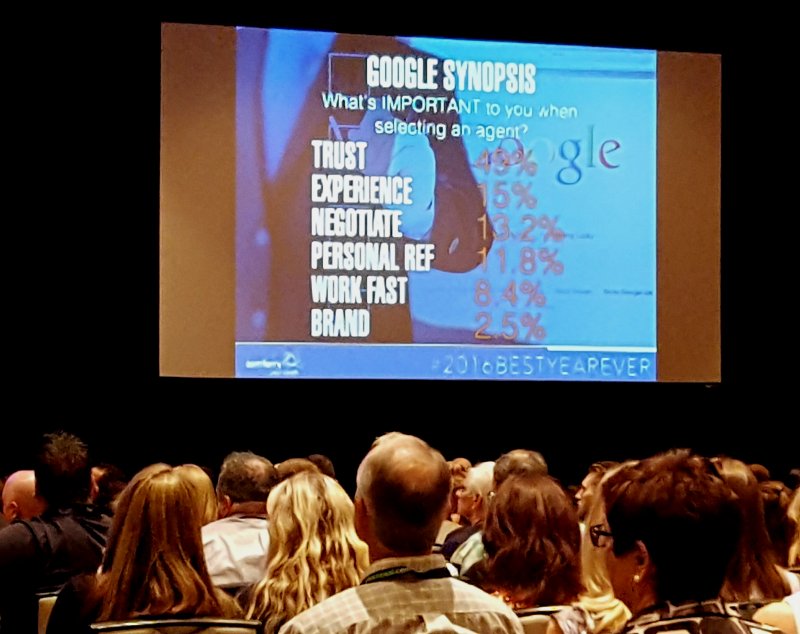
Yesterday while I was attending the Real Estate Mastermind Summit, Tom Ferry was the speaker and he told us he was asked to attend an event at Google wherein the movers and shakers of real estate marketing came together to discuss strategies. Tom put up the following slide:

Google, using stats and surveys, determined what was most important to the consumer when selecting a real estate agent. It’s hard to see in my photo, but TRUST was number one at 49%. In second place was EXPERIENCE at 15% and so on down the list. TRUST represented half within this study.

So how do you get trust? Obviously direct referrals from their friends communicates THEY trust you. Some trust may come into play after meeting you. In 2014, Placester and T3Experts conducted research regarding online reviews. They found 85% of consumers use online reviews to evaluate local businesses and professionals. They also found 90% trusted peer recommendations like online reviews 6.5 times more then traditional advertising. The percentages of consumers looking to online reviews for Realtors is growing each year.

Your online snapshot is everything. Agent Reputation gives you the tools you need to get reviews where they count. Google, Yelp and Facebook

CJ Hays @area51testpilot

Why some Realtors think Yelp is harming them – Stats and Algorithms

First off I want to give a shoutout to Matthew Bushery at Placester.com who recently wrote a great article on Yelp.

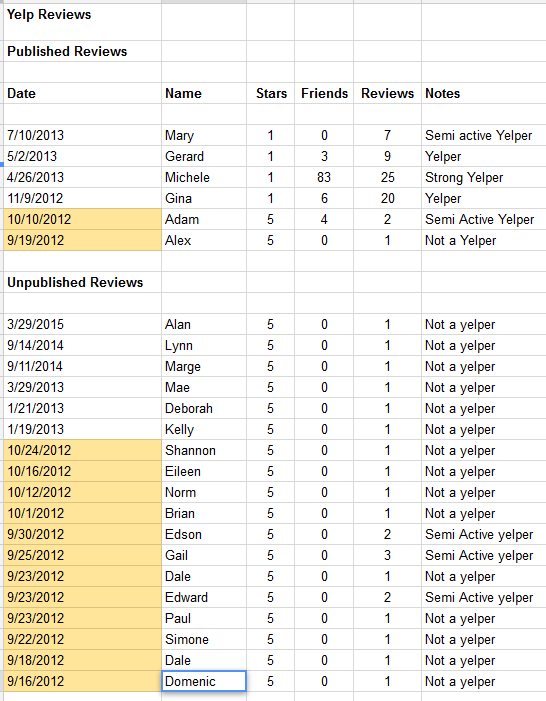
Today’s post is inspired by a Realtor I spoke to this afternoon as I was going over their reputation report. Other then their awesome Zillow reviews, the Google footprint was a bit weak. And their Yelp page showed 7 reviews with a 2-Star average rating. There were “18 other reviews that are not currently recommended” below the line.

This always upsets companies or business professionals reviewed on Yelp. Using this image below, I will lay out a response that will hopefully help you to understand a bit more about how Yelp works.

When I Googled this Realtor, the 2-star Yelp review was staring me in the face. I know they felt harmed by Yelp for hiding 18 5-star reviews and publishing four 1 star horrible reviews. Setting aside the fact they will never be able to terminate their Yelp account, I wanted to offer some insight.

Two of the negative reviews stated the reviewer actually had completed real estate transactions with this agent. I had suggested that if these two reviewers were making this up, the agent could ask their broker to write a letter stating they never had clients with these names which could be submitted to Yelp for review.

On or about 9/16/2012, this agent or somebody representing them sent out an e mail to a mix of prior clients, friends or family letting them know they established a Yelp account and they were asked to leave you a 5 star review.

Starting on the 16th and continuing through 10/24/2012 a total of fourteen 5-star reviews came in to Yelp. That is unnatural and is a big red flag. Then when you see that most of these reviews have had zero activity in the past three years, based upon their algorithm and tracking, Yelp assumes they asked all of these people to leave them positive reviews which is against their guidelines.

The “zero friend/one review” accounts under the line, most likely signed up to leave them a review and then immediately left that review, never to be heard from again on Yelp. Yelp tracks that. You simply cannot ask non-Yelpers to leave you reviews or they will be buried.

Now IF any of the inactive Yelpers became active, there is a chance this activity might get the reviews after 10/24/2013 published

I was going to suggest getting an additional letter from the brokerage or providing transaction documentation tied to each name of those below the line for submittal to Yelp, but if it was within the dates I mentioned, it probably wouldn’t matter because so many reviews came in within such a short time-frame. You might be able to do this with the three reviews from 2014/15 and get those upgraded.

They have all of these reviews from 2012, most of which don’t count. Six from 2013. Two from 2014 and only one this year. This shows they had a push in 2012 and then sat back to allow natural review postings which is why these four one star reviews are published along with the reviewers Yelp activity.

A correct strategy at the moment the client is doing the happy dance, for all transactions moving forward, is to mention you are building your online reputation and to find out if they are active online reviewers. It really would not take many to push you up. But they have to be Active Yelpers.

They want active Yelpers to be motivated to find the vendors they do business with and leave honest reviews on their own. You also can’t just sit back “hoping” you get reviews. You have to be proactive. You need a plan. We have that plan.

CJ Hays @area51testpilot #CJ4marketing