Historical Content Retention(HCR) With Real Estate Websites You Own

Many of you know my stand on website ownership vs renting your real estate website. It all boils down to owning your online assets and the SEO value of your Historical Content Retention(HCR).

Blogging needs to be a real estate agents best friend. In a perfect world, you are blogging on a WordPress website you OWN at least twice a week, if not every day. As long as you stay with WordPress, you can always upgrade to new sites and the content you created will will stay intact with any images, videos, dates and the URL it was indexed on.

As a real estate agent actively blogging, if you are renting your website that has a blog and you choose to buy a new real estate website, you may end up throwing away the historical SEO value of your prior active blogging. And in fact, every time you change websites, the search engines have to re-index your new site and this can lead to essentially starting over with a blank slate in the search engines.

I was with one of the first companies that brought WordPress to real estate. Ease of content creation, maintenance, SEO attractiveness and blogging was and still are strong points with having a WordPress real estate website. Then about 4 years ago, new companies started offering cheap monthly rental websites with blogging technology. So many of you created pages and pages of content over a period of years and at the moment you choose to go with another site, you are told there is no easy way to import your prior content into your new site.

But you thought your website was built in WordPress and you just purchased a WordPress website. The site may have been built with the same base php technology, but if your dashboard does not look like this, you are out of luck.
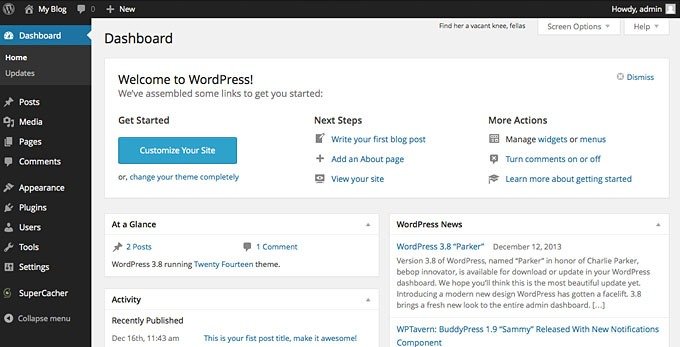
So if you buy a WordPress real estate website and you want to bring over your months or years of content from a site that does not have this backend, you will have to manually reenter your posts. Your valuable history will be gone. All of this content including the images will have to be re-indexed. Not a good scenario.

All I am asking you to do is think about where your content is being posted. Do you have full control of that asset? Is your content exportable if you change site providers? Will your historical content retention be up to date?

Don’t get me wrong. I am not trying to talk you out of your amazing PPC or Paid Leadgen website. All of these leads you are paying for have to go through that vendor’s online process, some of which are off the hook. I am just advising you to think about placing your unique personal content within a technology you own and control.

Agent Reputation is starting a new season with a new marketing platform

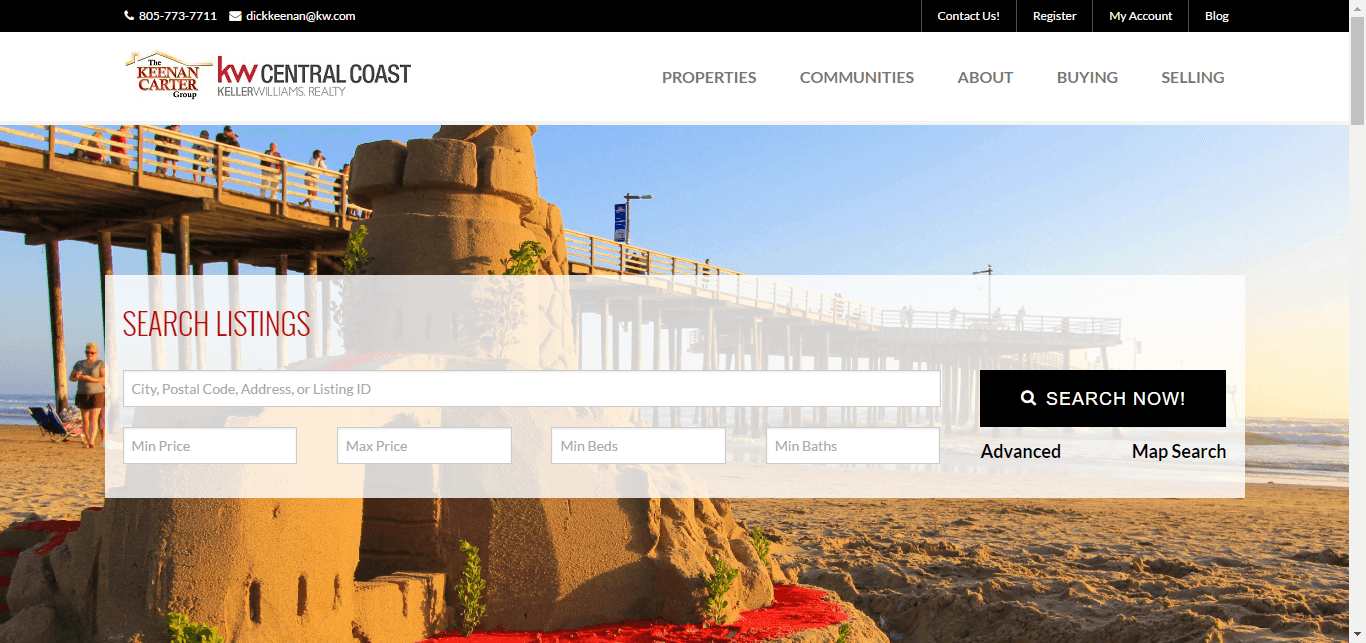
Last night we launched our new online marketing platform for the real estate industry which you can access from our homepage.

First and foremost, I have to thank Jim Marks, the former owner of Virtual Results, for hiring me as his marketing director in 2011. Though I had quite a bit of marketing experience under my belt, this was the start of my journey into the real estate industry. I became a “road scholar” traveling with Jim on all of his speaking engagements at Xplode, PNC Mortgage and Inman Events including the original Agent Reboot.

I was fortunate to learn from Jim and also from many of the real estate marketing influencers you all know today. So I have to give a shout out to:  Jay Thompson, Chris Smith, Matt Fagioli, Tom Ferry, Joe Sesso, Bob Stewart, Steve Pacinelli, Anu Kumar, Bodilyn Jolly, Molly McKinley, Dale Chumbley  and Eric Stegiman.

In 2014, Sean McCrory, the founder of Agent Reputation, saw the need to help real estate agents, teams and brokerages in obtaining and publishing positive reviews. Our Reputation Marketing system has been very successful with a 90+% retention rate over the past five years. Just over three years ago, clients asked us to find them a web design option. We found nothing that would meet their needs as we would recommend, so we opened our own shop.

We started out quietly. Not ringing our own bell too much with our sites. Never self promoting in the various social media groups.  We wanted to analyze statistics, consumer experience and conversion. As we developed we were getting referrals from some of the top coaching and marketing businesses in the industry. Our referral business was so large, we never had to spend a dime on advertising.

As we evolved through technologies we developed, marketing and technology companies approached us to integrate their products into our websites. So a huge shout out to IDX Broker, eMerge, IMAX CRM and Displet.

We build semi-custom real estate websites our clients own outright. All of our sites include an IDX, Reputation Marketing, a CRM, an  email marketing system and content marketing. We are offering an online marketing solution second to none in the real estate industry.

Please spend a few moments checking out our website.

How to find out if you actually OWN your real estate website design

When you attend a real estate marketing event I am speaking at, you will hear me say, “Why rent when you can own?” I am speaking of websites of course and not home sales. In an older post I go over all the different types of real estate websites you can have designed, but at the end of the day, if you want to own your website outright, your options are few.

I recently had a Realtor post in the Lab Coat Agents Facebook group asking about websites. We had a private discussion about real estate website design and the next day she asked me, “How do I know if I will actually own the website once I order it?” This is a great question because there are sales reps telling prospects they will own their website when in all reality, they may own their content but not the container.

These are the questions to ask:

“OK, so you are telling me I own the website. That would mean if I wanted to, I could take the website and move it to my personal hosting account on Godaddy. Right?”

“And if I own the website, I can have one of my web developers go in and make modifications?”

“And if it is WordPress, not only can I host it anywhere, but I have full admin controls and can add any plugins, pages, script or code I want. Correct?

“And lastly, if I own the site I can switch out the IDX anytime I want?”

If they answer no to any of the above, you don’t own your website. I am not saying this is a horrible thing mind you if you are happy with the website you are renting and the marketing services that web developer is offering. I just feel you need to have complete control over the history of your online branding.

For example, Keller Williams agents and teams represent a majority of our business. Many KW agents use the web system provided by KW. For the longest time that was a website system provided by Market Leader. Some Keller Williams agents had horribly outdated Market Leader sites for years. Then at last year’s Family Reunion, it was announced that they were going with Placester which was a HUGE improvement. Still though, I feel agents with any major national real estate franchise should be off the corporate grid as much as possible and control their branding outright.

At the end of the day you want leads, and maybe owning your website is not a big deal to you. This is why you go with the big lead gen companies that generate leads via PPC campaigns, and loan you a website while you are using their marketing system. This is a great strategy if you have the budget, however I still feel you need to own the “mother ship”.

The mother ship should be WordPress based and the blog should be activated. You should own your site outright so you can build an online history through blogging and community specific landing pages. Your site should have an IDX integrated that will allow for the search engines to essentially index the MLS as if you owned it. When you Google the street address of one of your listings and see your competitors with your listing on their website, they have this indexing active. We are an IDX Broker Developer Partner.

Question for you, setting aside international real estate brokerages that change website platforms for their agents, have you ever been victim to a website provider going out of business? As a personal favor to a major player in the industry I won’t mention the company name, but they went out of business giving their clients 30 days notice. Many Realtors had procrastinated and were left without websites for a time. If you own your own site, this does not happen.

There is no major conspiracy from real estate website vendors to keep you from owning your own website. There are some great website providers in the marketplace that have developed some great call to action (CTA’s) processes for lead generation provided you are getting the traffic. Most of these technologies are proprietary in nature and can only be served up through an internal shared site server system within their control. No way around it, and that’s OK if you are happy with the results you are getting.

Lastly, If you are renting your website make sure it has a blog in a sub-directory and not a sub-domain. And so that you don’t lose your online blogging history should you ever change website providers, make sure they have a way to transfer your content to you should you ever leave.

Obviously by now you clearly understand my position on website ownership. Just make sure YOU clearly understand what you own vs what you are renting.


Real Estate Website Design Primer: Understanding WordPress and SEO

The Internet has greatly changed the way homebuyers search for properties. According to the National Association of REALTORS® and Google, real estate-related queries on the search engine grew by 253% from 2009 to 2013. This number proves that having a website is imperative for real estate agents if they want to turn those queries into leads.

But if you are to have a website, be sure it’s one you actually own, not the barebone “site” that your brokerage provides you for free. And if you are going to commission real estate website design, there’s only one platform to consider—WordPress.

Why? Simple: WordPress is one of the most search engine optimization (SEO) friendly content management systems out there. As you might have heard, SEO involves performing tweaks to your site’s codes and its content that make it easier for search engines to parse, which positively affects your site’s ranking in search results. Luckily, Google happens to really like WordPress, as you’ll see below:

Search Friendly URLs

Have you ever encountered a webpage URL that’s a jumble of letters and characters? You might have wondered why the author didn’t just change it so it’s reflective of the page’s content. As it happens, you and Google are thinking the same thing. With WordPress, though, you can conveniently customize your URLs so search engines can easily make sense of your site’s contents.

Auto Ping

Every time you upload new content on your site, WordPress automatically sends out a “ping” to search engines alerting them of your latest post. This is crucial because Google tends to prioritize sites and pages that regularly post new content in search results.

SEO Plugins

WordPress also has a robust plugin selection, including those designed to automate search engine optimization. For instance, whenever you create new content, the SEO plugin will remind you to use keywords in the title and description of your post. As such, you can publish SEO-friendly content even after your website developer turns over control of the site to you.

Three-Click Rule

Good SEO practice dictates that all pages in your site should be accessible in three clicks or less. This is important because user experience also factors heavily into how Google ranks your site. Luckily, WordPress makes it easy to structure your website’s internal linking so that it follows this maxim.

Indeed, having your own website is one of the best realtor marketing ideas in today’s digital-savvy era. If you want to build your own website, make sure to ask your developer to use WordPress as your platform. And if you need help with developing your site, don’t hesitate to contact the experts for guidance on this process.

Sources:

Real Estate Searches Up 253%, Realtor.org

Why Search Engines Love WordPress, SEODesk.org

Using the Hermann Grid illusion in real estate website design

I was recently researching a news article on three Manhattan properties that are the most expensive properties on the market. $95 Million+.

This led me to a real estate agent search page located on a high end brokerage site wherein they used black boxes containing the individual agent information and links. These black boxes are separated with white space. When you visit the page you will start to see grey blobs within the intersections of the white space. And in fact, depending on your vision, these blobs will make it quite uncomfortable to look around the page for the agent of inquiry.

I have seen this before in an optical illusion called the Hermann Grid Illusion.

Hermann Grid IllusionThe Hermann grid illusion is an optical illusion reported by Ludimar Hermann in 1870. The illusion is characterized by “ghostlike” grey blobs perceived at the intersections of a white (or light-colored) grid on a black background. The grey blobs disappear when looking directly at an intersection.

I am sure the designer had no clue they were creating a layout that would be so annoying to the visual cortex but this illusion will make most people want to leave the page as quickly as possible. If I were to redesign the agent directory, I would make the agent boxes white with a thin dark border on each box and possibly a light grey background. In fact I am sure the image I have placed on the page is distracting you as you are trying to read this post

It is hard enough getting traffic to a site much less keep people on the site. We have to design sites that make the eyes comfortable, easy to navigate, and provide action points as quickly as possible.

CJ Hays – Follow me on Twitter

#CJ4marketing

How To Earn Clients With A 5 Star Online Reputation


Your online reputation is made up by everything people are saying about you, or what they’re not saying. Potential listing or buying clients will determine who they will choose to represent them based on what they can find out about you online. You can control how you will appear and earn more clients by learning how to create a 5 star online rating for your business.

85% of consumers use the internet for research before making a decision. – Yelp

When you do a search online for your name, or company name, what do you find? When a listing client can’t find much information about you, where do you think they feel their listing will show up online? Both buyers and sellers want to see what other people are saying about you on sites they trust, like Google, Yelp, and Facebook.

The power to create a lead generating online reputation is literally at your fingertips. Treat every current and future client like a new potential 5 star review! Earn positive reviews from clients in order to show potential clients that you are the agent to trust.

Many of our clients tell us that by increasing their online reputation, they are generating 3-5 times the amount of leads from the dollars they’re spending on marketing. Clients have also told us that they have a higher conversion ratio of the leads they’re buying, because their reviews are so easy to find on trusted sites like Google.

Realtor Marketing Ideas

Own Your Website and Domain

If you are using your corporate/brokerage website platform, you generally don’t have much control over SEO, content, and other important factors when it comes to getting your website ranked favorably on Google. Even if you aren’t ready for your own real estate website design, you may consider purchasing domains that ought to belong to you or your business. This keeps them out of the hands of someone that may use it in a way that will hurt your online reputation, or demand that you pay an absurdly high price to get it back.

Earn Positive Reviews on Trusted Sites

One of the best marketing tips for real estate agents is building and marketing a 5 star online reputation. Start off with exceptional customer service, and have a system in place to allow you to capture feedback from every client. An effective reputation marketing strategy involves using a system that includes:

  • Gathering feedback from new, current, and past clients
  • A system to address client concerns before they become negative reviews
  • An easy way for clients to leave feedback
  • An easy way to get your feedback posted to trusted review websites like Google, Yelp, and Facebook
  • Continuous monitoring of client reviews that are posted about you online


Create and Manage Your Business Information Online

Surveys show that half of local searches are for business information such as address, phone, and hours. Search engines like Google pull this information from many sources across the internet, and most are from business listings. Some listings you may have created yourself, and some are created automatically by sites like Yelp, Merchant Circle, and more. It is very important for all your business listings to have consistent and accurate information. Inaccurate or missing information from your listings can be very damaging. Search engines can detect inconsistent information across your business listings, and search engines do not like to give inaccurate information. This can result in lower search results, rankings, and leads.

Do you want to see how you show up on local directories? Get a free business listing scan here.

Take Control of Your Online Reputation

When you take into consideration the amount of extra leads you can generate by having a superior presence and reputation than your nearest competitors online, building a 5 star reputation should be a number one priority!

For more tips, or to schedule an online demo of our services, visit us at www.agentreputation.net